
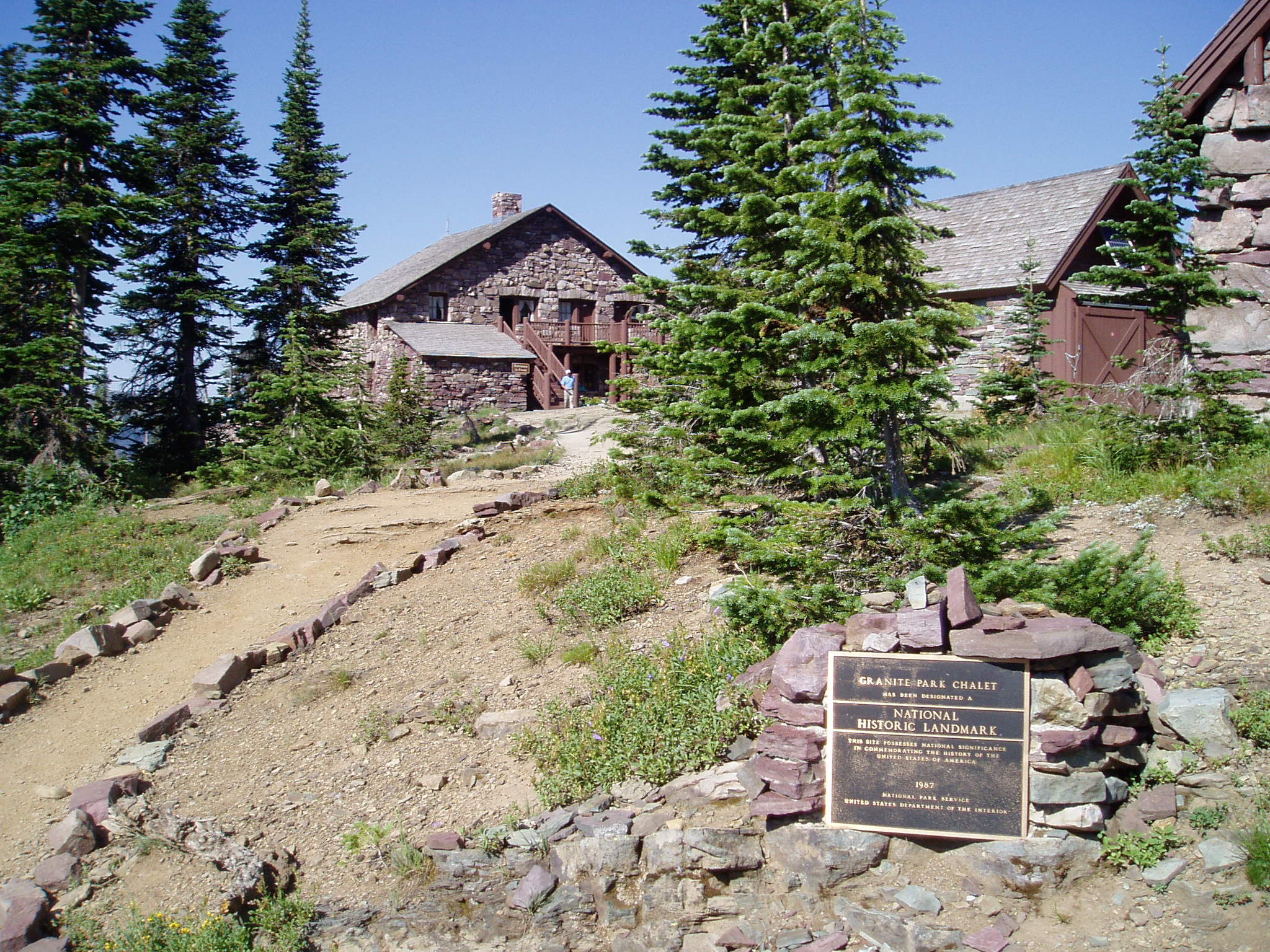
Granite Park Chalet sits in the backcountry of Glacier National Park, and no road reaches it. That single fact shapes everything else: how you travel, what you carry, what you pay for and what the night is like. This guide explains the reasoning behind each choice so you can plan with confidence.
- The chalet can only be reached on foot, by three trails of very different length and effort.
- Rooms are booked through a lottery for 2027, and bedding and food are not included.
- There is no running water or electricity, so you plan your supplies before you leave the trailhead.
Table of Contents
What kind of place is Granite Park Chalet?
The chalet stands on the west side of the Continental Divide, north of Going-to-the-Sun Road. It was built in 1914 and 1915 by the Great Northern Railway to give visitors comfortable lodging inside the park. It was the last of the railroad’s chalets to go up, and it is one of only two backcountry chalets that survived.
Today it is listed as a National Historic Landmark. The logs and stone used to build it were gathered locally, which is why it sits so naturally against the Garden Wall, the ridge that runs along the divide here.
Understanding what it offers helps you set expectations. This is lodging in the wilderness, not a lodge with a restaurant. The sources describe a limited-services facility with a shared kitchen where overnight guests cook their own meals. Snacks and some small supplies are sold on site, but you should treat them as a bonus rather than a plan.
The elevation is about 6,693 feet, so even a gentle walk feels a little harder than the same distance near sea level. Plan your pace accordingly and drink water steadily.
Which trail should you take to get there?
Three trails lead to the chalet, and the right one depends on how much time and energy you have. Each begins at a different trailhead, so your choice also decides where you park and how you return.
- The Loop Trail is the shortest route, at 4 miles with about 2,200 feet of elevation gain. It is short but steep, which is why it suits a quick, direct climb.
- The Swiftcurrent Trail runs about 7.5 miles with roughly 2,300 feet of climbing, starting from the Many Glacier side. The steepest part comes near the end, just below the pass.
- The Highline Trail starts at Logan Pass and is about 7.6 miles, a moderate hike that follows the Garden Wall.
The Highline is the one most people want, because the scenery is the reason to come. One hiker’s trail report rates it among the best hikes in the park and describes it as a long walk rather than a technical challenge if you are fit and prepared. It also notes a strenuous spur up toward a glacier overlook that is worth the extra effort.
A sensible plan is to walk the Highline in on the first day and leave by another route on the second. That splits the effort into two manageable days and lets you see two different parts of the park without repeating yourself.
Trail access depends on conditions, and a route can close for reasons such as snow or bear activity. Keep a second option in mind, and check current status before you set out.
How do you get a reservation?
The chalet fills early, so the booking method matters as much as the date. For 2027, reservations run through a lottery rather than a first-come opening day. Entries are placed in a random order, and the people selected receive a set time window in which to book. The chalet and Sperry Chalet run separate lotteries, so you enter each one on its own.
The logic of a lottery is fairness: it removes the advantage of being fast on a single morning. What it asks of you is early planning. Read the instructions on the chalet’s own website well before the entry window opens.
If your dates are flexible, there is a second route. People cancel, and openings appear in the weeks before a stay. One guest who worked in the park that summer found a space about a month ahead this way. Checking back regularly costs nothing and can turn a closed calendar into a real night.
Before you commit, read the cancellation terms carefully, because they are stricter than many people assume.
What does a night cost, and what is not included?
For 2026, a two-person room was listed at $265 a night plus Montana lodging tax. Children under three stay free, and rooms have twin bunk beds. Check the official site for current rates before you plan your budget.
The price covers your bed, use of the kitchen and an evening talk with a hot drink and a small snack. It does not cover food, and it does not cover bedding. This surprises people, so decide early:
- Carry your own sleeping bag, or
- Order linens ahead of time at $40 per person. The chalet asks that linen orders be placed at least 14 days before your stay.
The payment schedule is also worth knowing. A 50% deposit is due within 14 days of booking, and the balance is charged 30 days before arrival. Cancel 30 or more days out and you receive a refund minus a $25 fee. Weather and other wilderness hazards do not change these terms, so a storm on the day does not earn you a refund.
Because of that, travel insurance is worth considering, especially for an early- or late-season trip when conditions are less predictable. The reservation office can answer questions directly.
What should you carry for a night with no power or tap?
The chalet has no electricity, and the kitchen and dining room use propane lighting. There is no running water either. The nearest water source is about a quarter mile from the building, so you collect it and treat it yourself. Plan to carry a filter or purification method, along with a headlamp so you are not relying on anything inside.
Food is the next piece of planning. With only a shared kitchen and limited snacks, you carry what you intend to eat, for dinner, breakfast and the trail. Choose items that cook quickly and pack light, since every pound is felt on a climb at altitude.
Other practical points:
- Pack bedding unless you ordered linens in advance.
- Bring sun protection and plenty of water for exposed sections of trail, where shade is scarce.
- Carry bear spray and know how to use it, since the area is bear country and trail reports mention sows with cubs near the route.
- Start early if you hike from Logan Pass. The parking lot there fills in the morning, and early starts also give you cooler temperatures on the exposed sections.
Logan Pass has limited drinking water, and the visitor center does not sell beverages, so bring what you need for the first stretch. A free park shuttle serves stops at the trail ends, which makes a one-way hike practical without a second car.
Related reading
- Thin Air on the Rim: What 8,000 Feet Does to a Visit to Bryce
- Salt Lake City to Zion National Park: Planning the Drive and the Last Miles
Sources
- Granite Park Chalet (nps.gov, accessed 2026-11-24)
- Granite Park Chalet Review: Rooms, Food, Cost, & Tips … (nomadsidekick.com, accessed 2026-11-24)
- Granite Park Chalet — Wikipédia (en.wikipedia.org, accessed 2026-11-24)
Photo: Granite Park Chalet, July 26, 2007 – panoramio, by Gary Miotla, CC BY 3.0 (Wikimedia, via Openverse)