
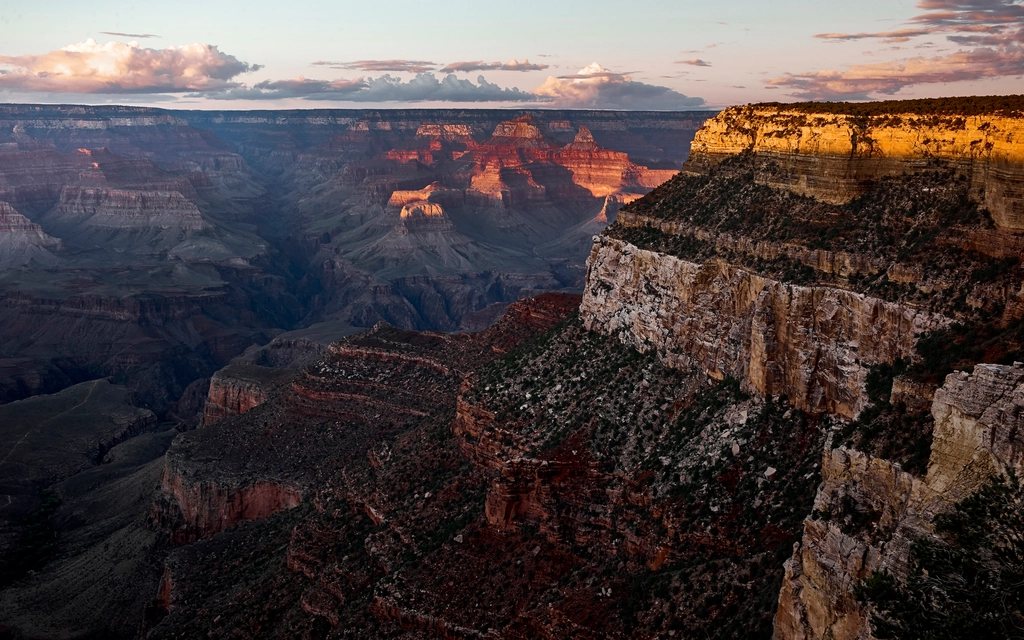
The first thing most visitors notice at Bryce Canyon is the view. The second, usually halfway up the climb out of the amphitheatre, is that they are breathing harder than the trail seems to justify. The rim of Bryce sits at about 8,000 feet (2,400 m) at the main viewpoints and rises to 9,115 feet (2,778 m) at Rainbow Point, which makes it the highest of the region’s parks by a wide margin: Zion’s canyon floor is around 4,000 feet (1,200 m), Kanab about 4,900 feet (1,500 m), and the airports you flew into lower still. That difference, combined with air that is close to bone dry, changes how you should plan a stay. Here is what happens, why, and what to do about it.
Table of Contents
What the numbers mean
At 8,000 feet the air pressure is roughly three quarters of what it is at sea level, and so is the amount of oxygen in each breath. Your body compensates by breathing faster and deeper and by pushing the heart a little harder, which is why the flat rim walk feels normal and the 600 foot (180 m) climb out of the Navajo Loop feels like twice its length. Water boils at about 197 F (92 C) rather than 212 F (100 C), so pasta and rice take longer, and a cup of tea is never quite as hot as it looks. Ultraviolet light is stronger, by something like a third compared with the coast, because there is less atmosphere to filter it and the pale rock reflects it back. And the relative humidity in the middle of a summer day is often in the range of 10 to 20 percent, low enough that sweat evaporates before you notice it and a wet towel is dry within the hour.
The first night
Most healthy people feel nothing at 8,000 feet beyond breathlessness on hills and, often, a poor first night’s sleep. A minority, and it is not predictable by fitness or age, get the mild form of altitude sickness: a headache, a slight nausea, loss of appetite, and a heavy, foggy feeling that comes on six to twelve hours after arrival. It is most common in people who drove straight up from Las Vegas or Zion the same day and then went walking hard. Rest, water, a light meal and a mild painkiller usually resolve it by the second morning. The things that make it worse are alcohol on the first evening, dehydration, and the decision to push through a big walk while feeling rough.
We build a stay around it. If we can, we sleep a night at 6,000 feet (1,800 m) or so in Tropic, Panguitch or Kanab on the way up, which takes most of the edge off. If we cannot, we make the first afternoon at the rim an easy one: the paved walk between Sunset and Sunrise Points, a sunset, dinner, an early night. The descent into the amphitheatre waits for morning two. Anyone with a serious heart or lung condition should ask a doctor before planning a stay at this height.
Dry air is the quieter problem
The headache gets the attention, but in our experience the dryness does more to spoil a stay. At sea level you lose water through breathing at a rate you never notice. At altitude, in air this dry, that loss doubles or more, on top of what you sweat on the trail, and because the sweat evaporates instantly you feel cooler and thirstier later than you should. The symptoms creep up: chapped lips by the second day, a nosebleed on the third morning, cracked skin on the knuckles, contact lenses that feel like grit, static that snaps from every car door.
The fix is boring and works. Drink before you are thirsty, and aim for something like 3 to 4 litres (roughly a gallon) a day for an adult doing moderate walking, more in summer. Add a little salt to the day, through food rather than tablets, because plain water on its own can leave you feeling washed out. Carry lip balm, a small pot of hand cream and saline for nose and eyes. Sleep with a damp towel over a chair or a basin of water in the room if the cabin has electric heating, which dries the air still further. And go easy on coffee and alcohol on the first two days; both increase the water you lose.
Sun and cold at the same time
Altitude produces a combination that catches out people from low, humid places: strong sun and cold air at once. At Bryce in early October you can stand at Sunrise Point at 30 F (minus 1 C) in the morning and burn your nose before lunch. The pale limestone bounces light upward, so shade from a hat is only half the story. We use a high-factor sunscreen applied before leaving the room, reapplied after any sweat, on the underside of the chin and the tops of the ears; sunglasses that actually block ultraviolet, for the snow glare in winter as much as the summer; and a long-sleeved shirt in a light, loose fabric, which is cooler than bare arms once you are out on the rim. The cold half is simpler to handle: a hat and a fleece in the bag on every walk, in every month, because the temperature at 8,000 feet falls fast when the sun drops behind the plateau or a cloud crosses it.
A short checklist for the rim
For a stay of two nights or more at Bryce or at Cedar Breaks, which is higher still at over 10,000 feet (3,050 m), the list we run through before leaving:
- A night below 6,500 feet (2,000 m) on the way up when the schedule allows.
- Easy first afternoon, big walk on the second day, highest viewpoints by car.
- Two litres of water per person in the pack for any walk into the amphitheatre; more with children.
- Lip balm, hand cream, saline, a mild painkiller and any regular medication, all in the daypack rather than the car.
- Sunscreen, sunglasses, a brimmed hat and a warm layer, together, always.
- No alcohol on the first evening, and less than usual afterwards.
Why it is worth it
None of this should put anyone off. The same altitude that thins the air produces the park: the freeze and thaw of two hundred nights a year carves the hoodoos, the dryness keeps the sky transparent enough for some of the darkest, sharpest stars in the country, and the cool nights are the reason summer here is a relief rather than an ordeal. A visitor who drinks enough, sleeps low the night before and takes the first day gently will feel the altitude as a pleasant lightness in the air rather than a weight in the head. Plan for the height, and the rim gives you everything it has.