
Zion rewards visitors who decide the shape of the day before they arrive. The park is popular, its main canyon runs on its own transport rules, and its best-known hikes carry hazards and permits that change what is realistic. This guide explains why the planning matters and then walks through the main things to do.
- Plan ahead: the park is among the most visited in the country and rarely works as a spontaneous stop.
- The canyon floor is reached by shuttle, which shapes where you start and how you hike.
- Season, flood risk and crowds should decide which hike you choose, not the other way round.
Table of Contents
Why does Zion need planning when other parks do not?
Zion sits in the southwest corner of Utah, close enough to two major cities that it works as a short detour or a destination in its own right. That convenience has a cost: the park is one of the busiest in the nation, and it is part of Utah’s well-known group of five national parks, so almost every season outside winter counts as a busy one.
The practical lesson is simple. Lodging, transport and the permit-controlled hikes all fill up, and the days of turning up with no plan are over. Think of the planning as protection for the experience rather than a chore. A morning that starts at the right trailhead, at the right hour, is worth far more than a day spent circling a full parking area.
As a rough guide to time, a long weekend of three to four days gives you enough to see the main canyon, try one demanding hike and still have room for a quiet afternoon. A full week would let you add the quieter corners.
How does the shuttle shape your day in the main canyon?
During peak season, private vehicles are not allowed into Zion Canyon unless you hold a reservation at the lodge there. Everyone else rides the park shuttle. This sounds like a restriction, but it removes the hardest part of a canyon day: you step off the bus at the trailhead and start walking, with no parking to worry about at the other end.
If you sleep in Springdale, the town has its own shuttle that carries visitors to the park entrance, where you change to the park shuttle. That means you can explore the whole park without a car once you are in town, although you do need a vehicle to reach Springdale in the first place.
A good first move is to ride the shuttle end to end before choosing a hike. You see the canyon walls, learn which stops serve which trails, and can judge how crowded each area looks. The stops that matter most are the Grotto, for the West Rim trail, and Temple of Sinawava, the last stop, where the river walk begins.
Outside the shuttle season the road is far quieter, and some visitors rent an electric bicycle in Springdale to ride the canyon road. Be honest about the suitability of that option. There is no separate bike path in the canyon and the road is narrow, so it only suits people who are comfortable riding alongside traffic.
Which hikes should you choose, and in what order?
Zion offers hikes across a wide range of effort, so match the walk to your energy and to the conditions on the day.
A short viewpoint to start
The Canyon Overlook Trail is one of the shorter and more popular walks. It lies beyond the Mount Carmel tunnel, so you reach it by driving through the tunnel and looking for the small parking areas just after it. Those areas fill quickly, so allow time to find a space. The walk is about one mile round trip, with a few narrow stretches and a short climb near the start, and it ends with a broad view over the canyon. Light matters here: a visit near sunset can put the sun directly in your eyes and flatten the view, so a morning visit is the better choice.
The river walk and the Narrows
Beyond that point you are walking in the river itself. The first stretch is the busiest part of any trail in the park, and the crowds thin steadily the farther upstream you go. Most people go out and back, turning round whenever they have had enough, which makes this one of the most flexible hikes you can choose. The full top-down route is a very different undertaking: it is long and calls for some canyoneering.
What you wear depends on the season. In summer heat, shorts and sturdy sandals can be enough, while in colder months many walkers rent specialist gear from a local outfitter. Walking sticks are often left at the start, but bringing your own is a sensible backup. In some years the Narrows close briefly in spring because of snowmelt.
Angel’s Landing
This is probably the best-known hike in the park, and the final portion now requires a permit because crowding on the chain section made it frustrating and dangerous. The route starts from the Grotto shuttle stop, climbs gently through Refrigerator Canyon, then rises up a run of switchbacks known as Walter’s Wiggles before reaching Scouts Lookout. It is not especially hard as hikes go, but it is steep, and you should plan on several hours. Starting before dawn is the simplest way to avoid the worst of the crowds.
Why does flood risk change the way you plan the Narrows?
The explanation matters more than the rule. A slot canyon funnels rain from a huge area into a narrow channel, so water can arrive with little warning even when the sky above you is clear. That is why flash flooding in a place like the Narrows can be deadly.
The habits that follow from this are straightforward:
- Check current conditions at the ranger station before you set out, on the day itself.
- If thunderstorms are forecast anywhere in the area, do not enter the Narrows.
- Treat a good morning as no guarantee for the afternoon, and keep an exit in mind at every point on the walk.
- Build a second option into your plan, such as the river walk or a viewpoint, so a closed or risky canyon does not ruin the day.
Having a fallback is what keeps this from feeling like a loss. If conditions rule out the water, a canyon-floor shuttle ride and a short walk still make a worthwhile day.
When should you go, and where should you stay?
Summer can bring heat above 100 degrees with strong sun, while winter brings rain and snow and much cooler days. Spring and fall are the most comfortable, with daytime averages around 70 degrees, which is why they are also busy.
If you want fewer people, winter is the quiet option. The park stays open all year, and many travellers dismiss the cold months without good reason. Fewer visitors means a calmer canyon, and a quieter river walk if you rent the right gear.
Lodging is limited compared with larger parks, so book early. Inside the park there are three campgrounds, of which two take reservations and one is first come, first served, and the lodge fills fast, though cancellations do appear. The campgrounds inside have flush toilets but no showers or electrical outlets, which is why some visitors camp just outside the gate in Springdale, where showers and other facilities are easier to find. Springdale also has hotels, glamping and rentals, and staying there lets you use the town shuttle instead of driving.
For a longer trip, many people pair Zion with neighbouring parks to the north and east.
Related reading
- Capitol Reef in a Day and a Half: Fruita Orchards, the Waterpocket Fold and Cathedral Valley
- Kanab and the Vermilion Cliffs: A Plain Guide to Permit Lottery Country
Sources
- Top 10 Things to Do at Zion National Park (campfiresandconcierges.com, accessed 2026-11-14)
- The Best Things to Do in Zion National Park (with Itinerary) (dangtravelers.com, accessed 2026-11-14)
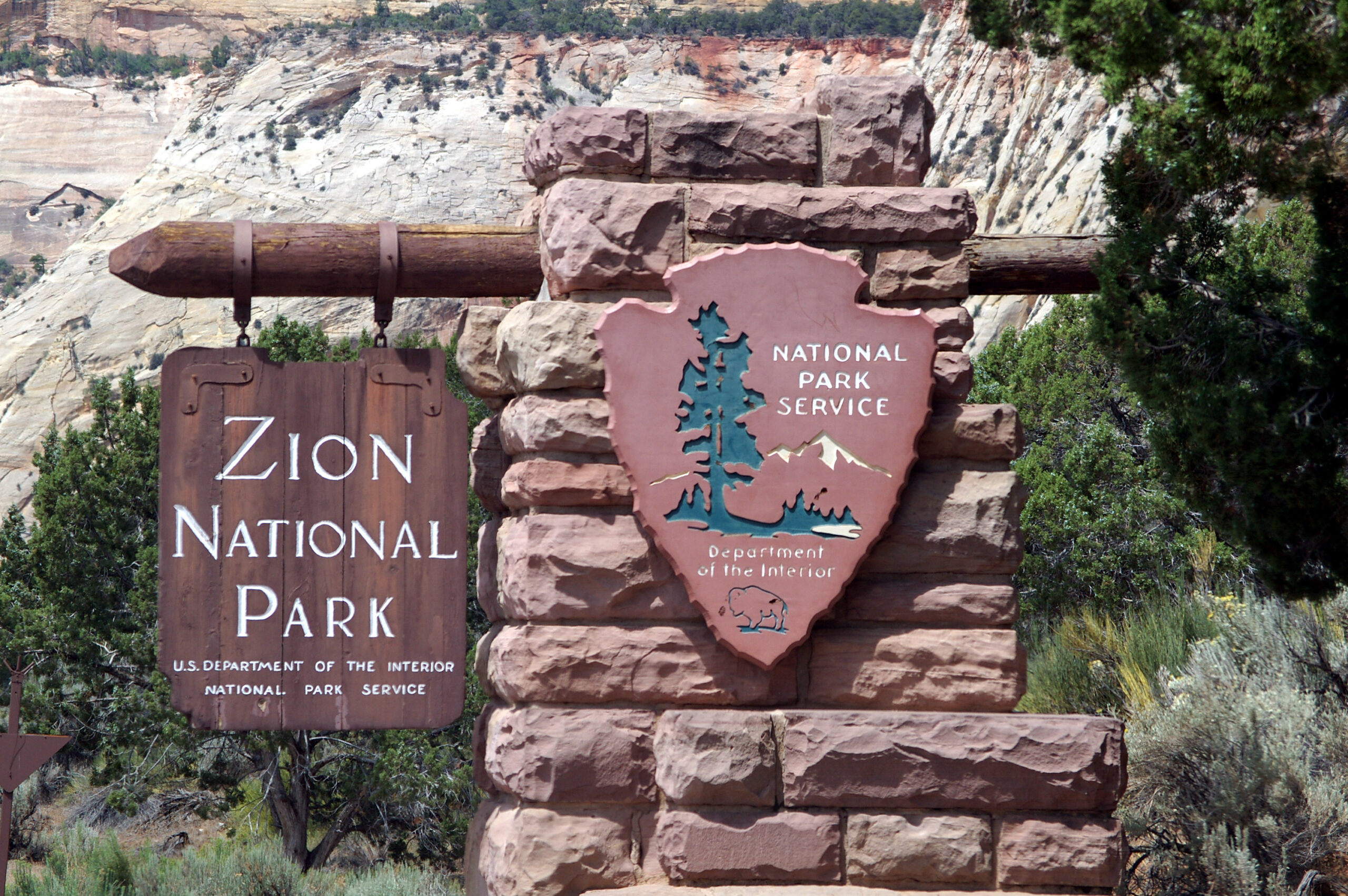
Photo: Zion National Park east entrance sign-20070724, by Mark Wagner, CC BY 2.5 (Wikimedia, via Openverse)