
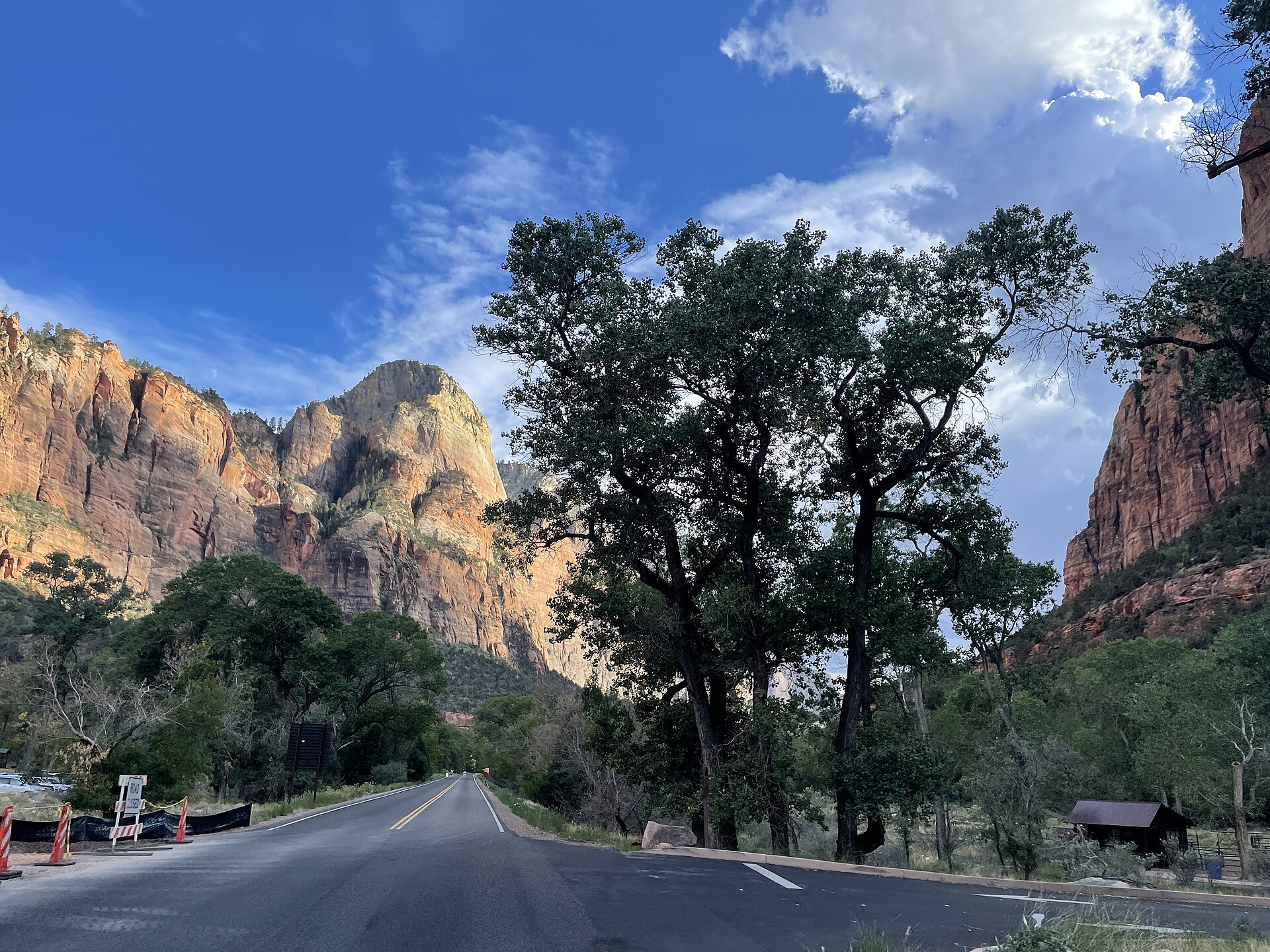
On a map, Bryce Canyon and Zion look like neighbours you can tick off in a single sweep. On the ground they behave like two separate trips: one is a high plateau with an amphitheatre of rock spires, the other a deep canyon between tall cliffs. Understanding why they differ makes it much easier to decide how many days each deserves and in which order to visit.
- The drive between the parks is short, roughly 1.5 hours with no stops, but the scenery and the climate change a great deal along the way.
- Each park rewards a stay of at least a day or two, so a single-day sweep of both gives only a taste.
- Season, fees and lodging choices shape the trip more than distance does.
Table of Contents
Why do two parks so close together feel so different?
The simplest way to understand the contrast is to think about where you stand. At Zion you arrive low and look up at cliffs that close in around you. That reversal of viewpoint changes almost everything: how you move, what you carry, and what the day feels like.
The landscape itself tells the story. Bryce is known for its hoodoos, the odd, slender rock formations that fill its amphitheatre, and for high-elevation forest around them. Zion is known for dramatic canyon scenery, with towering red cliffs rising above a river-cut corridor. As you travel from one to the other, the drive passes from pine forest into red sandstone country, and the change in vegetation and rock is easy to notice from the car window.
This is the reasoning behind treating them as separate trips rather than interchangeable stops. A hoodoo viewpoint and a canyon walk ask different things of you, so a plan that works for one will not simply copy across to the other.
Elevation sets the tone
Bryce sits much higher than Zion’s canyon floor, and that gap is the main reason weather, clothing and effort differ between the two. For the detail on how altitude affects your body and pace at the rim, the separate piece on thin air at Bryce covers it. Here it is enough to remember that a cold morning at one park does not predict the conditions at the other.
How far apart are they, and which route should you drive?
The two parks are roughly 70 to 85 miles apart depending on the route you choose, according to Ruby’s Inn. The most direct and scenic option takes about 1.5 hours of driving with no stops, though you will almost certainly want to stop.
The route works like this, so you can picture it before you set off:
- Leave Bryce Canyon heading north on Highway 63.
- Turn left onto Highway 12 West.
- Join US-89 South.
- Turn right onto UT-9 West, which leads into Zion through the East Entrance.
The reason this route is favoured is that it unfolds as a gradual descent. You leave the high plateau and its forests, then watch the rock and vegetation shift as you lose height. It is a drive that rewards slowing down, not a transfer to be rushed.
Worthwhile stops along the way
- Red Canyon: a smaller, free-to-enter taste of red rock and hoodoos with accessible trails, handy as an opener or a farewell to Bryce. The guide to Red Canyon and Scenic Byway 12 describes the surrounding road.
- Dixie National Forest: the stretch where green pine forest meets red sandstone cliffs.
- Zion-Mount Carmel Tunnel: a historic tunnel about a mile long. Large vehicles, RVs included, typically need an escort and may face set hours and fees, so check the National Park Service website for current rules before you go.
- Checkerboard Mesa: a sandstone formation with a cross-hatch pattern, found just outside the tunnel on the east side.
If you are travelling with a large vehicle, treat the tunnel as the one place where advance checking is not optional. The rest of the route is straightforward.
Can you see both parks in a day?
Technically, yes, in the sense that you can reach a few highlights in each park during one very long day. In practice you would be moving between viewpoints with no time to walk below the rim or along the canyon, and that is where each park gives most of its character.
For a more satisfying visit, plan on at least one to two full days at Bryce and one to three full days at Zion. The reasoning is that each park has a signature experience that takes real time. At Bryce it is descending among the rock spires instead of only looking down on them; if that appeals, the one-day itinerary and the longer Fairyland and Peekaboo loop guide show what is possible. At Zion it is getting into the canyon itself rather than viewing it through a windscreen.
Choosing how to split your time
If you have only a few days, ask which kind of scenery you most want to spend time inside. Someone who prefers quiet viewpoints, clear air and early-morning light may lean toward more time at Bryce. Someone who wants to walk beneath big cliffs may lean toward Zion. Neither choice is wrong, but deciding in advance stops you from dividing the days evenly out of habit and leaving both parks feeling rushed.
When is the best time to visit each park?
The drive between the parks is pleasant all year, but the seasons change what each stop feels like.
- Spring (March to May): milder temperatures, wildflowers and fewer people than summer. A good season for hiking.
- Summer (June to August): long, warm days suit outdoor plans, but this is the busiest period, and brief afternoon thunderstorms are common.
- Fall (September to November): cooler weather, autumn colour that is especially notable in Zion, and thinning crowds. Another strong season for hiking.
- Winter (December to February): far fewer visitors and a quiet atmosphere, but cold temperatures and possible snow or ice, particularly at Bryce’s higher elevation.
The logic here is that the same weather arrives differently at different heights. Because Bryce is higher, winter conditions bite harder there, and road conditions deserve a check before you travel, especially for the Zion-Mount Carmel Tunnel. Summer storms matter for a different reason: in Zion, watch for flash flood warnings and let them guide where you walk. The monsoon-season guide explains the thinking behind those rules, and the seasonal overview of the rim helps if you are still choosing a month.
Spring and fall tend to be the easiest compromise if you want both parks in reasonable comfort without peak-season crowds.
How should you plan fees, lodging and preparation?
Practical details matter more here than in many trips, because lodging near both parks tends to fill early, particularly in peak season. Book accommodation ahead, whether you choose a base near Bryce or a town outside Zion such as Springdale.
On cost, each park charges an entrance fee per vehicle, and an America the Beautiful Pass covers entry to both. If you are visiting two or more fee-charging federal sites in a year, it is worth comparing the pass against paying separately. The budgeting article looks at the wider cost of a remote canyon-country trip.
Planning your base
Staying close to the entrance at Bryce saves travel time and makes sunrise and sunset viewpoints easy to reach. Ruby’s Inn, for example, sits about a mile from the park entrance and has a park shuttle stop on its property. If you prefer to compare several bases before choosing, the guides to the towns around Bryce and to where to sleep in canyon country set out what each area is good for.
Preparing for desert conditions
- Carry plenty of water, since this is a desert environment.
- Use sun protection and dress in layers, because temperatures shift with elevation and time of day.
- Download the official National Park Service apps and check each park’s website for shuttle schedules, road conditions, trail closures and ranger programs.
Checking current information is part of the plan, not an afterthought. Shuttle times and closures can change, and the official sources are the only reliable place to confirm them. The explainer on reaching Zion by the east side also walks through how the shuttle works.
How do you sequence a combined visit?
A sensible order is to give Bryce its time first, then drive the descent to Zion and finish there. The reasoning is that the route to Zion leads you from high forest down into the canyon country, so you arrive at the lower, warmer park through the east entrance with the scenery building toward it. Travelling the other way works too, but the drive then climbs back toward the plateau.
A straightforward shape for the trip looks like this:
- Spend one to two full days at Bryce, including time below the rim if your legs allow.
- Take the drive in a relaxed way, stopping at Red Canyon or Checkerboard Mesa as time permits, and confirm tunnel conditions beforehand if you have a large vehicle.
- Spend one to three full days at Zion, leaving room for weather or shuttle changes.
Whichever direction you choose, keep the drive day light. At about 1.5 hours without stops it is short enough to leave room for a viewpoint walk or a slow lunch, and that margin is what keeps a combined visit from feeling like a chore.
Treat the two parks as complementary rather than competing. One is a high, open rim with intricate rock; the other is a deep corridor between cliffs. Seen in sequence, with enough time at each, they make a far more rewarding pair than any attempt to compress them into a single pass.
Related reading
- Below the Rim for Longer: The Fairyland Loop and the Peekaboo Loop at Bryce Canyon
- Tropic, Panguitch and Cannonville: The Base Towns Around Bryce and What Each Is Good For
Sources
- From Bryce Canyon National Park to Zion National Park (rubysinn.com, accessed 2026-11-04)
Photo: Zion National Park – HCP – October 02, 2022 – 025 – Zion Canyon Scenic Drive, by Vulturesong, CC0 (Wikimedia Commons)
