
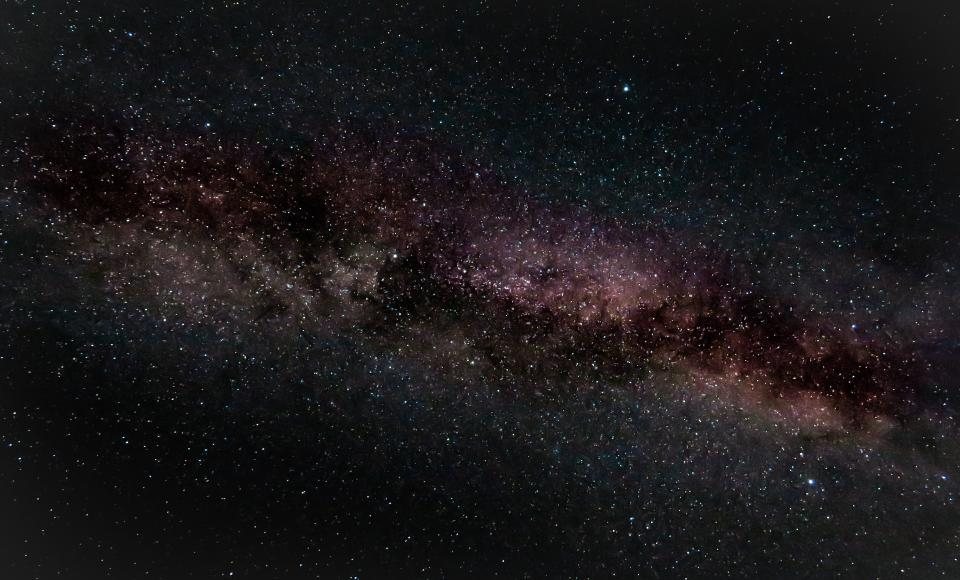
The first time we walked out to the rim after dark, we did not look at the hoodoos at all. We looked up, and for a long minute nobody said anything. The sky over Bryce Canyon is not simply “nice for stars.” It is one of the last places in the continental United States where the night looks the way it looked to everyone who lived here before electric light. This article explains why that is true, what the numbers behind it mean, and how to make the most of it during a stay.
Table of Contents
A high plateau a long way from anywhere bright
Darkness is mostly about distance and altitude. Bryce Canyon sits on the eastern edge of the Paunsaugunt Plateau at 8,000 to 9,100 feet (2,400 to 2,780 metres). The nearest large cities, Salt Lake City and Las Vegas, are each roughly 270 miles (435 kilometres) away by road. Between the park and those glowing horizons lie mostly empty ranges, national forest and the vast Grand Staircase-Escalante National Monument to the east. There is simply not much out there to throw light upward.
Altitude does the rest. At 8,000 feet the air above you is thinner, drier and cleaner than at sea level, so starlight arrives with less scattering. Southern Utah is also a high desert: most nights of the year are cloudless, humidity is low, and the transparency of the sky is exceptional. Add the fact that the rim faces east across the Paria Valley, where there are no towns of any size for tens of miles, and you have a viewing platform that is hard to improve on.
What “one of the darkest” actually means
Astronomers rate night skies on the Bortle scale, which runs from 1 (a pristine sky) to 9 (an inner-city sky). Bryce Canyon regularly measures as Bortle class 1 or 2. In practical terms that means the Milky Way casts a faint shadow on a moonless summer night, the zodiacal light is visible after dusk, and the naked-eye limiting magnitude reaches about 7.4, roughly a full magnitude beyond what most rural skies allow.
The park likes to say that around 7,500 stars are visible to the unaided eye on a clear moonless night. Under a typical suburban sky that number is closer to a few hundred. The difference is not subtle. Familiar constellations become hard to pick out because they are crowded by thousands of fainter stars you have never seen, and the Milky Way stops being a pale smudge and becomes a structured river of light with dark dust lanes and bright knots.
The Dark Sky Park designation
In 2019 Bryce Canyon was certified as an International Dark Sky Park. The label is more than a marketing badge. To earn it, the park had to inventory every outdoor light fixture, replace or shield those that spilled light upward, commit to ongoing sky-quality monitoring and run a public education programme. The lighting around the visitor centre, lodge area and campgrounds is now warm-toned, low and downward-facing for that reason.
The park also belongs to a wider constellation of protected skies. Cedar Breaks National Monument, about an hour and a half west at over 10,000 feet (3,050 metres), holds the same designation. Capitol Reef National Park, to the northeast, was one of the earliest certified parks in the region. Together with the low-light towns in between, they form one of the largest contiguous dark-sky regions in the country. That is the real reason Bryce is so dark: it is not an island, it is part of a continent of night.
Ranger programmes and the June festival
Bryce Canyon has run astronomy programmes since the 1960s, and its volunteer “Astronomy Rangers” are one of the park’s institutions. From late spring to early autumn, the schedule typically includes evening constellation talks, telescope viewing near the visitor centre and, around the full moon, guided night walks along the rim. These are free with park entry and are announced on the daily programme board; check the times when you arrive rather than trusting a printed schedule from home.
Each June the park hosts a multi-day Astronomy Festival, usually timed near the new moon. Dozens of telescopes are set up by volunteers and visiting clubs, and the crowds are cheerful rather than overwhelming. If you can plan a stay to coincide with it, do. If you cannot, any moonless night from May through September will deliver most of the same sky without the extra people.
Reading a good night before it happens
Not every night is equal, and a little planning pays off. The variables that matter most are moon, cloud and wind.
- The moon: aim for the week around new moon. Even a half moon washes out the fainter parts of the Milky Way.
- Cloud: summer monsoon storms build in the afternoon and often clear by late evening, but not always. Late spring and early autumn are the most reliable.
- Wind and cold: the rim is exposed and the temperature drops fast after sunset at this altitude. Even in July we carry a warm layer, a hat and gloves.
- Timing: astronomical darkness in midsummer does not arrive until close to 11 p.m., so plan a late night rather than an early one.
The best single trick is to give your eyes twenty to thirty minutes without any white light. Switch your phone to its dimmest red mode or leave it in a pocket. Once your eyes have adapted, the sky keeps getting better for the next hour.
Why it matters beyond the view
We have come to think of the dark at Bryce as a resource, like clean water or quiet. Migrating birds navigate by stars. Nocturnal animals, including the park’s bats and owls, depend on real night. The plateau’s own residents, from the small towns along Highway 12 to the ranches in the valley, have kept their lighting modest partly by tradition and partly by choice, and the result is a sky that people now travel across the world to see.
So when you stand at Sunset Point at midnight and the Milky Way rises over the amphitheatre, remember that you are looking at something rare and fragile as well as beautiful. Keep your headlamp dim, keep your voice low, and let the dark do its work. It is, in our experience, the most memorable free thing southern Utah has to offer.